vibe bike
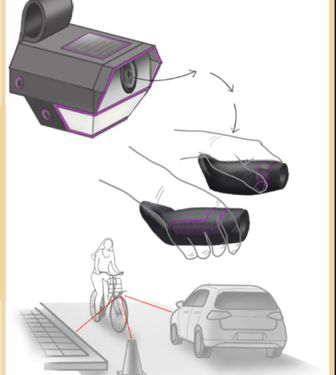
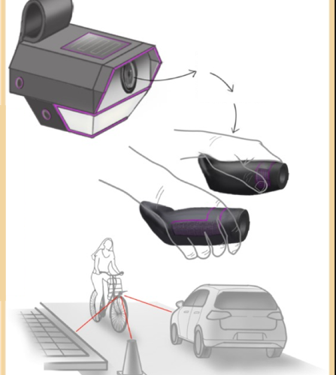
An assistive cycling solution designed to restore independence and navigation safety for cyclists with Stargardt’s disease by leveraging peripheral vision.
Understanding the User Needs
co-creative process
We forced ourselves to solve two critical design pillars simultaneously: utility and desirability. The product absolutely had to function reliably under cycling conditions, but it also needed an appealing aesthetic. Assistive tech can often feel clinical or stigmatizing; we wanted to design a sleek, integrated solution that the user would feel proud to display on her bike.
Tactile Testing and Research
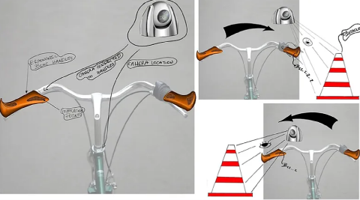
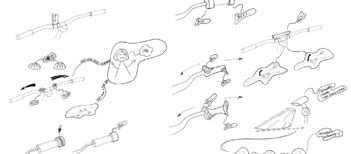
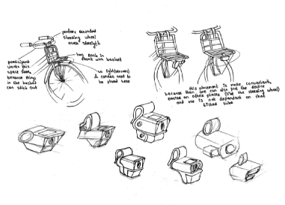
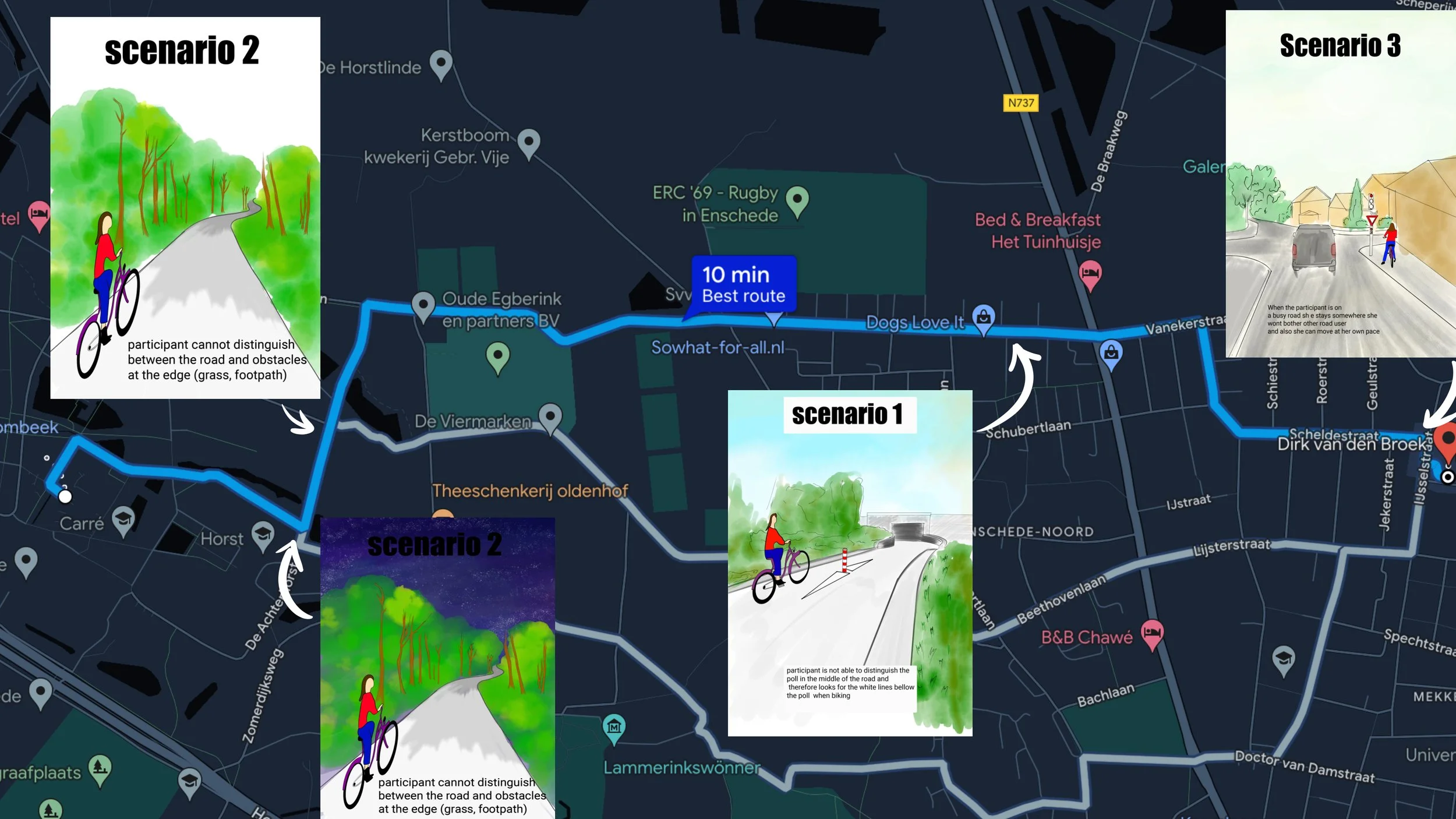
To fully comprehend the user’s real-world challenges, we conducted a "bike-along" session, shadowing her on her typical route. As she rode, she narrated the immediate environmental hazards, navigation blind spots, and cognitive fatigue caused by relying entirely on peripheral vision. This firsthand observation grounded our engineering goals in reality.
Creating a Functional and Desirable Product
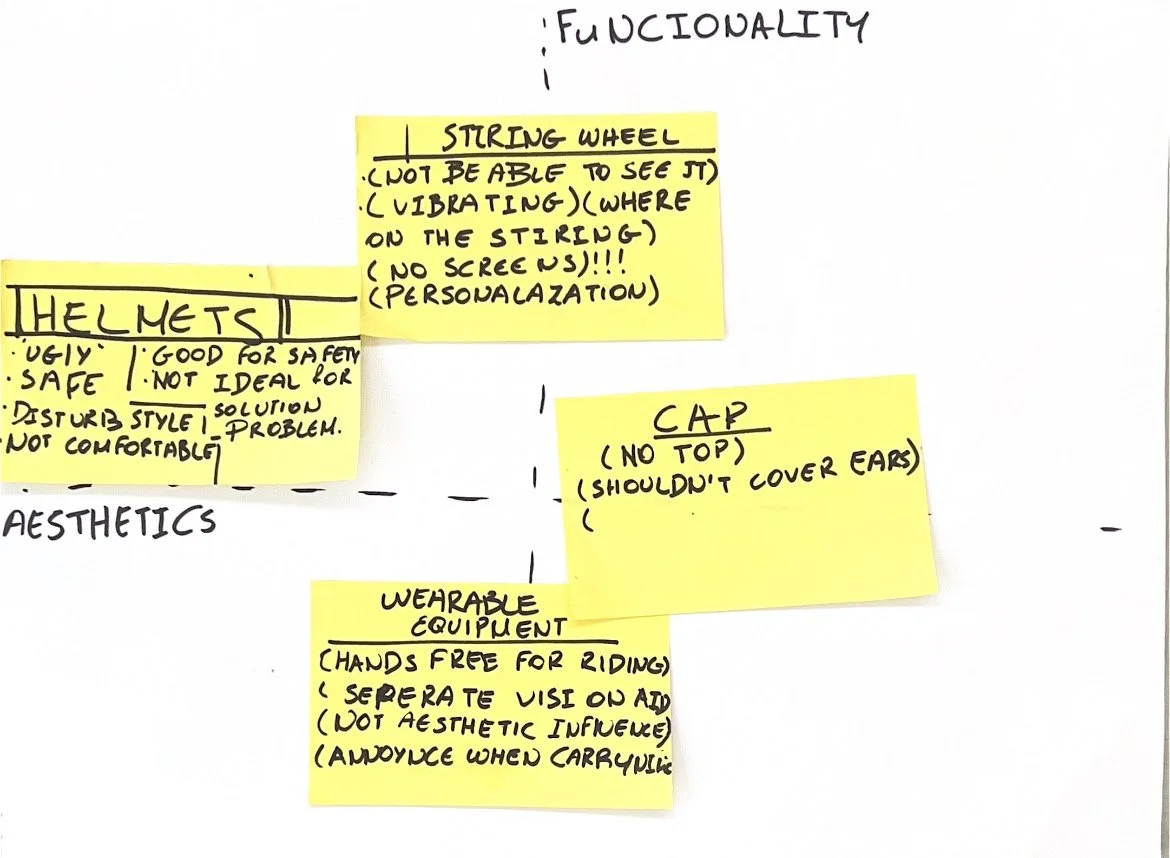
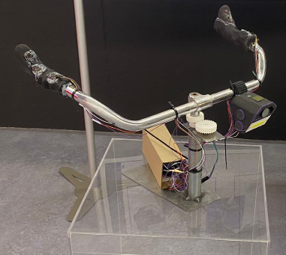
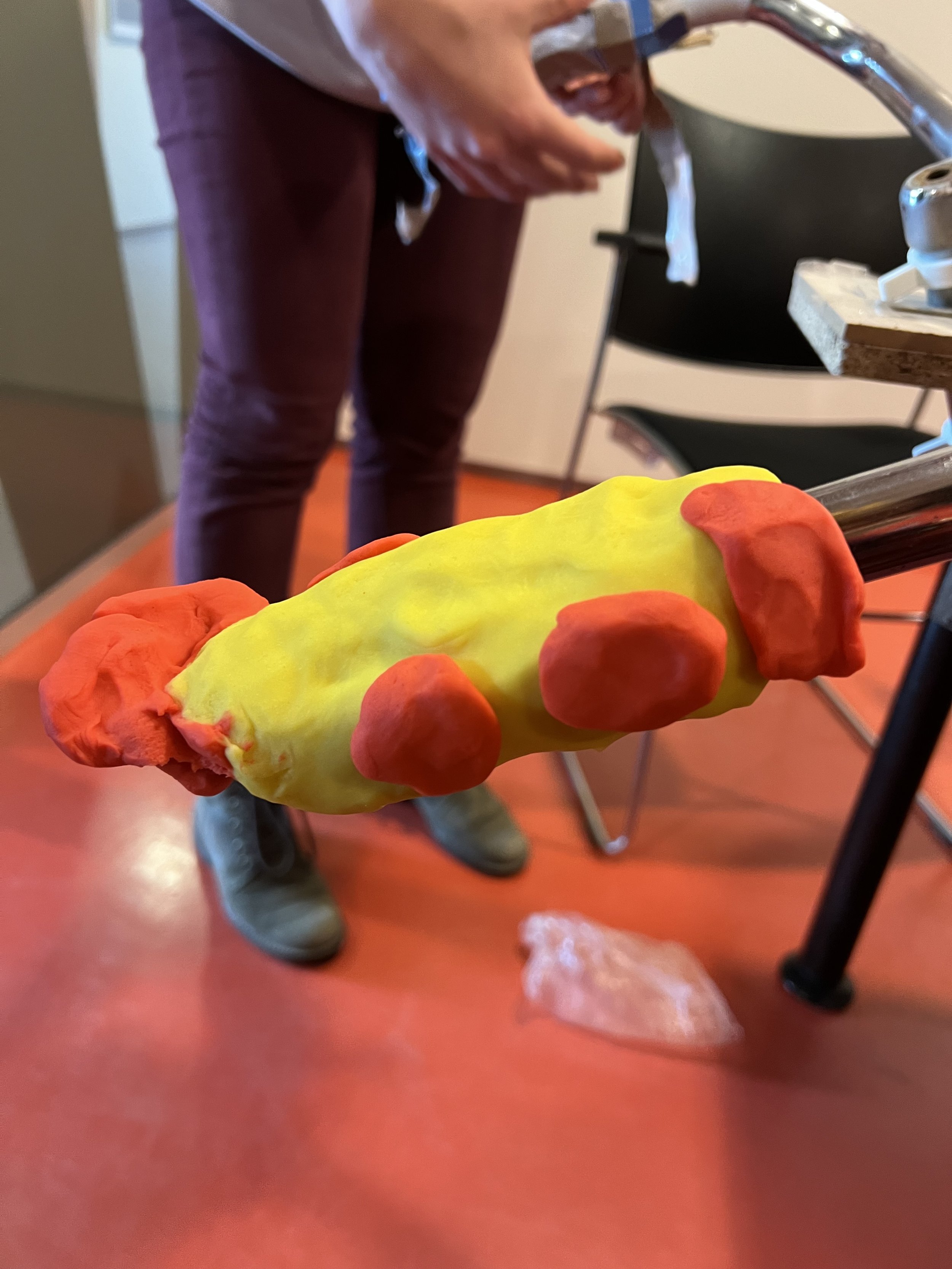
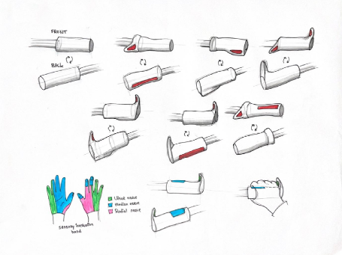
Once consultations led us to focus on the bike handlebars, we needed to map the exact physical interface between the user and the bike. We used play-dough on the grips to capture real-time impressions of her hand placement and grip pressure. I backed this physical testing with academic ergonomic research to locate the high-sensitivity nerve zones of the palm, ensuring our proposed haptic vibration feedback would be felt instantly without causing hand fatigue.